.png)
How to Keep Medication Cold While Traveling: A Practical Guide
Traveling with temperature sensitive medication can feel complicated because your medicine has to move through places you cannot fully control. Cars get hot, airport days run long, hotel refrigerators vary, and travel delays can stretch a short trip into a much longer day.
The good news is that a little planning can make
medication travel much more manageable. The most important step is to start with the storage instructions for your exact medication, then build your travel plan around those requirements.
Start With the Storage Instructions for Your Medication
Before choosing a cooler or packing your bag, check the current label, package insert or manufacturer instructions for your medication.
Storage requirements can vary significantly from one medicine to another. Some products must remain refrigerated until use. Others may have an approved room temperature window for a specific number of days. Some medications must never freeze, even though they normally require refrigeration.
Write down the temperature range and any allowed time outside refrigeration before you travel. If anything is unclear, contact your pharmacist, healthcare provider or the medication manufacturer rather than guessing.
Think About Temperature Protection, Not Just “Keeping It Cold”
One of the most common travel mistakes is assuming that colder is always better.
For many temperature sensitive medications, freezing can be just as damaging as excessive heat. That means placing medication directly against a frozen gel pack may not be appropriate unless the medication instructions and cooling system are designed for that setup.
The FDA advises following the labeled storage instructions for refrigerated medicines. Its insulin guidance also specifically warns against using insulin that has frozen and recommends protecting insulin from direct heat and sunlight.
Your travel setup should therefore protect medication from both overheating and accidental freezing.
Keeping Medication Cold on a Plane
For important medication, carrying it with you is generally more practical than putting it in checked luggage. A carry-on keeps the medicine accessible and gives you more control over how it is handled during the trip.
TSA allows medically necessary medications, liquids and related cooling accessories through airport security, although they may require additional screening. Medically necessary liquids can be carried in quantities greater than the normal 3.4 ounce limit when appropriate for the trip.
Tell the TSA officer about medically necessary liquids or cooling items at the checkpoint and be prepared for them to be screened separately.
If you are traveling with insulin specifically, our guide on Flying With Insulin explains TSA screening, packing and carry-on planning in more detail.
Do not assume that an airplane will provide refrigeration for your medication. Plan to arrive at the airport with a storage method that can handle the full travel window, including security lines, flight time, connections and possible delays.
Keeping Medication Protected During a Road Trip
Cars can change temperature quickly, especially when parked.
Keep temperature sensitive medication with you in the passenger area rather than leaving it in a hot trunk or parked vehicle. Protect it from direct sunlight and use the storage method recommended for your medication.
For longer drives, think beyond the expected driving time. Add extra time for meals, traffic, charging stops and unexpected delays.
If your cooling system depends on frozen components, refrigeration or power, know where you will be able to refresh or recharge it before you leave.
Keeping Medication Cold at a Hotel
If your medication requires refrigeration, contact the hotel before your trip and ask what refrigeration is available in the room.
A hotel refrigerator can be useful, but temperatures may vary. Avoid placing medication directly against a freezer compartment or very cold cooling plate when the medication must not freeze.
If you are unsure whether the refrigerator is suitable, ask the hotel about alternatives and follow the medication manufacturer’s instructions.
It is also smart to think about what happens before check-in and after check-out. Your medication may need to remain protected for several hours while you are traveling, sightseeing or waiting for a room.
Cruises, Tours and Long Travel Days
Cruises and organized tours can create additional stretches of time away from your hotel room or cabin.
Plan for embarkation, shore excursions, transfers and long days away from reliable refrigeration. If you are cruising, check with the cruise line before departure about medication refrigeration and any medical storage services it provides.
International travelers should also review medication rules for destination and transit countries before leaving home.
How to Choose a Medication Cooler for Travel
The right medication cooler depends on the medicine you carry and the way you travel.
Before choosing one, ask yourself:
• What does the medication manufacturer require?
• How much medication and how many supplies need to fit?
• How long will I be away from reliable refrigeration?
• Could a frozen cooling component come into direct contact with the medicine?
• Will I have access to electricity, a freezer or a refrigerator?
• What is my backup plan if the trip is delayed?
A compact system can be easier to carry through an airport or use during a day trip, while longer or more complicated travel may require a different cooling plan.
The Insulin Chiller and Portable Medication Cooling
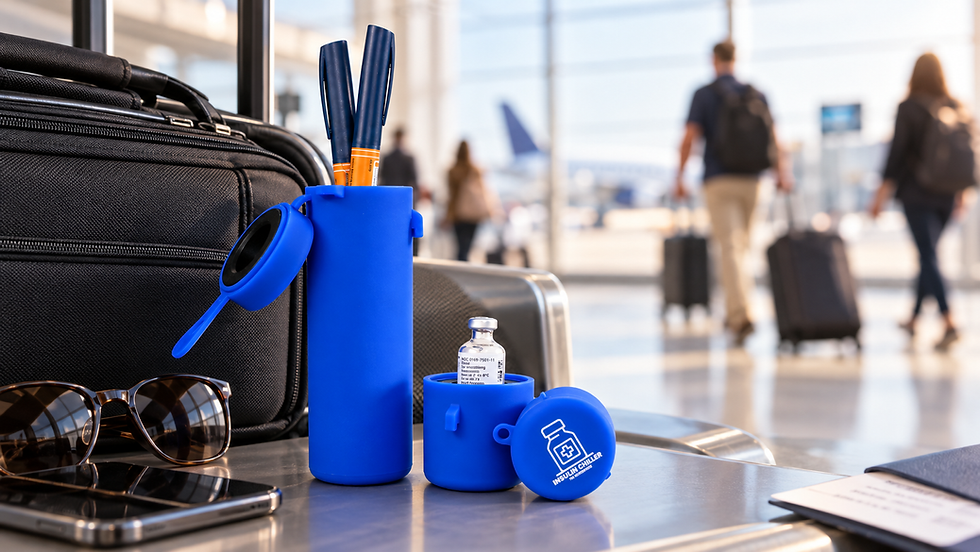
The Insulin Chiller offers compact portable cooling options designed around insulin and other appropriately sized temperature sensitive medications.
The Pen Chiller is designed for pen-style medications, while the Bottle Chiller provides space for small medication bottles or vials. The right option depends on the size of the medication you carry and its manufacturer storage requirements.
The Insulin Chiller should always be used according to its instructions and should not replace the storage directions provided by your medication manufacturer.
Explore The Insulin Chiller collection to compare portable medication cooler options for your travel routine:
Medication Travel Checklist
Before leaving home, confirm the following:
• Check the current storage instructions for your exact medication.
• Pack enough medication and supplies for the trip, with extra when appropriate.
• Keep important medication accessible during travel.
• Protect medication from direct heat, sunlight and freezing when required.
• Plan for airport security, connections and travel delays.
• Confirm hotel or destination refrigeration before arrival when needed.
• Know how your cooling system will be refreshed or recharged on longer trips.
• Keep your pharmacist, healthcare provider or medication manufacturer contact information available.
Frequently Asked Questions
How do I keep medicine refrigerated on a long flight?
Start with the storage instructions for the exact medication. Then choose a portable cooling method that can cover the expected airport time, flight, connections and possible delays. Do not assume the aircraft will provide refrigeration.
Can I put refrigerated medication directly on an ice pack?
Not automatically. Some medications can be damaged by freezing. Follow the medication label and the instructions for your cooling system, and avoid direct contact with frozen components when the medication must not freeze.
Can I bring a medication cooler through TSA?
TSA permits medically necessary medications and related cooling accessories in carry-on baggage, subject to screening. Medically necessary liquids may exceed the normal 3.4 ounce limit in reasonable quantities for the trip. Tell the TSA officer about these items at the checkpoint.
What should I do if my medication became too warm or too cold?
Check the current storage information for that specific product and contact a pharmacist, healthcare provider or manufacturer if you are uncertain whether it can still be used. Do not assume that medication is safe or ineffective based only on how the container feels.
Planning Ahead Makes Medication Travel Easier
Traveling with temperature sensitive medicine does not have to mean constantly worrying about refrigeration.
Know your medication’s requirements, plan for the entire travel day rather than just the flight or drive, protect the medicine from both heat and freezing, and have a backup plan for delays.
For more practical information about traveling with insulin, refrigerated medicines, GLP 1 medications and pet medications, visit our Medication Travel Guides at https://www.theinsulinchiller.com/guides.
Medical Disclaimer: This article is for general informational purposes only and is not medical advice. Always follow the storage instructions provided with your medication and consult your doctor, pharmacist, or healthcare provider with questions about your specific treatment or travel needs.
