.png)
Insulin Storage Temperature: Refrigerator, Room Temperature and Travel Guide
Proper insulin storage matters because temperature can affect how well insulin works. The challenge is that storage instructions are not identical for every insulin product.
The safest approach is always to follow the label for your specific insulin and ask your pharmacist or healthcare provider when you are unsure.
There are, however, several general principles that can make insulin storage easier to understand at home and while traveling.
What Temperature Should Insulin Be Stored At?
The FDA states that insulin manufacturers generally recommend storing unopened insulin in a refrigerator at approximately 36°F to 46°F. When stored

according to the product label, unopened insulin can generally be kept until the expiration date printed on the package.
Once insulin is in use, the allowable temperature and length of time outside refrigeration depend on the specific product.
The FDA notes that many insulin products in their original vials or cartridges can be kept between 59°F and 86°F for a limited period, commonly up to 28 days. Some products have different instructions, so the manufacturer’s label should take priority over any general rule.
Why Is Insulin Refrigerated?
Insulin is temperature sensitive. Excessive heat and freezing can reduce its effectiveness.
Refrigeration provides a controlled environment for unopened insulin before it is needed.
That does not mean every insulin product must remain refrigerator cold every minute after it is opened. Many products have approved room temperature storage periods, which is why checking the exact instructions for your insulin is important.
Can Insulin Get Too Cold?
Yes. Keeping insulin cool and freezing insulin are very different things.
The FDA advises people not to use insulin that has been frozen. The CDC also recommends that travelers avoid placing insulin directly on ice or directly against a frozen gel pack.
This is especially important when packing insulin for a trip. More cooling is not automatically better. The goal is to protect the medication within the storage conditions specified by its manufacturer.
Can Insulin Get Too Hot?
Heat can also damage insulin. The FDA advises keeping insulin away from direct heat and direct sunlight.
The CDC similarly recommends not leaving insulin or other diabetes medicines in a hot vehicle or in direct sunlight.
Potential problem areas include parked cars, sunny windows, beach bags, luggage left outdoors and other places where temperatures can climb quickly.
Insulin Storage While Traveling
Travel creates a different set of storage problems because you may be away from a dependable refrigerator for hours at a time.
Air Travel
Keep insulin and essential diabetes supplies accessible. The CDC recommends not putting insulin in checked baggage because temperatures in the baggage area may become too cold.
For more airport specific planning, our Flying With Insulin guide covers TSA screening, carry-on packing and travel day preparation.
Road Trips
Do not leave insulin in a parked vehicle. Even on a moderate day, the interior of a vehicle can become much hotter than the surrounding air.
Hotels
Before relying on a hotel refrigerator, check whether it is appropriate for your medication and avoid placing insulin against freezing surfaces.
If you have questions about the correct storage conditions, use the manufacturer’s instructions or contact your pharmacist.
A Better Travel Routine
Before leaving home, confirm the storage requirements for your exact insulin. Pack enough medication and supplies for the trip plus reasonable delays.
Keep the medication protected from direct heat, sunlight and freezing temperatures.
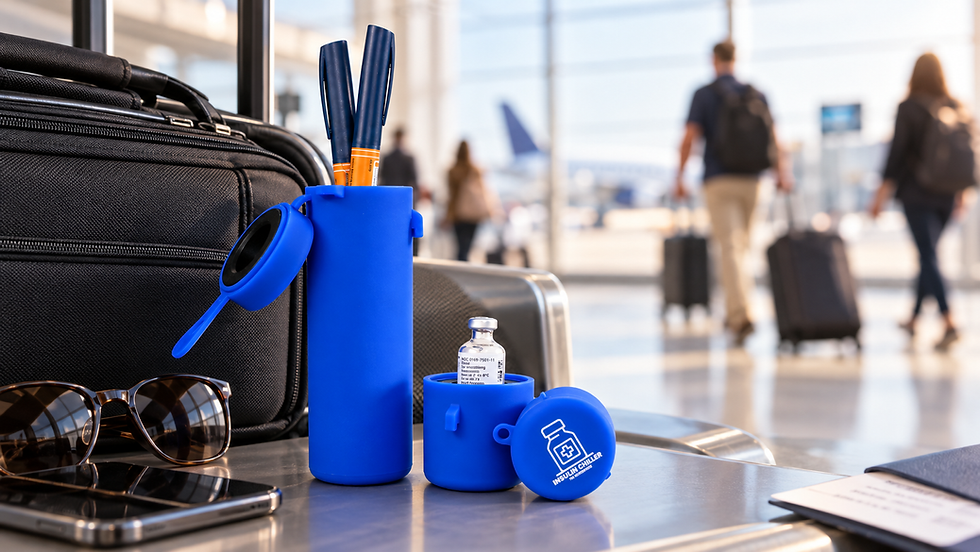
A purpose designed medication cooling solution can also make travel easier when you need to protect temperature sensitive medication away from home.
Explore The Insulin Chiller
The Insulin Chiller offers portable options designed to help travelers carry insulin and other appropriately sized temperature sensitive medications.
Explore the available Chiller products and choose the size and format appropriate for the medication you need to carry.
Always follow the storage instructions supplied with your medication. A cooling case does not replace medication specific guidance from the manufacturer, pharmacist or healthcare provider.
Frequently Asked Questions
Does all insulin need to stay refrigerated?
Not necessarily. Unopened insulin is generally refrigerated according to manufacturer instructions, while many insulin products can be kept at specified room temperatures for a limited period once in use. Check the label for your specific product.
What happens if insulin freezes?
The FDA advises not to use insulin that has been frozen. Contact your pharmacist or the insulin manufacturer if you are unsure whether a product was exposed to freezing temperatures.
Can insulin sit directly on an ice pack?
The CDC recommends not placing insulin directly on ice or directly against a gel pack. Protecting insulin from freezing is just as important as protecting it from excessive heat.
Medical Disclaimer: This article is for general informational purposes only and is not medical advice. Always follow the storage instructions provided with your medication and consult your doctor, pharmacist, or healthcare provider with questions about your specific treatment or travel needs.