.png)
Road Trip With Insulin: Storage and Packing Guide
A road trip gives you more control over your schedule than flying, but it can create a different challenge for insulin: temperature.
Cars can become very hot when parked, direct sunlight can warm medication quickly, and a cooler that works well for a short drive may need more planning on a full-day trip. Cold weather can create problems too, because insulin should not be allowed to freeze.
The safest approach is to start with the storage instructions for your exact insulin, then plan your route, stops and overnight stays around those requirements.
Check Your Insulin Storage Instructions Before You Leave
Insulin storage rules vary by product and by whether the insulin is unopened or already in use.
FDA guidance notes that insulin is commonly stored refrigerated and should be protected from extreme heat, direct sunlight and freezing. It also notes that many insulin products have a labeled room-temperature allowance, but the exact limits and time period depend on the product.
Before your trip, check the current prescribing information or manufacturer instructions for the insulin you use. If you are unsure how long your insulin can remain outside refrigeration, ask your pharmacist or healthcare provider before leaving.
Never Leave Insulin in a Parked Car
A parked vehicle can change temperature quickly, even when the weather outside feels comfortable.
Do not leave insulin in the trunk, glove box or passenger compartment while you go into a restaurant, attraction or store. Take the medication with you.
The CDC specifically advises travelers not to store insulin or other medicines in a hot car, in direct sunlight or directly on ice.
That means your road-trip plan should protect insulin from both overheating and accidental freezing.
How to Pack Insulin for a Road Trip
Keep your insulin and essential diabetes supplies together in a bag that stays with you rather than buried under luggage.
A practical travel setup may include:
• Your insulin in its original labeled packaging when practical
• Pen needles, syringes or other injection supplies you use
• Glucose meter, test strips or continuous glucose monitor supplies
• Fast-acting glucose or another treatment recommended for low blood sugar
• Prescription information and important medical contact information
• A portable cooling method appropriate for your insulin
• Extra medication and supplies for unexpected delays
CDC travel guidance recommends bringing enough medication for the trip plus extra when possible.
Keep the Medication Accessible
Avoid packing insulin at the bottom of a fully loaded trunk.
Even if the trunk itself is not extremely hot, you do not want to unload the entire vehicle every time you need access to your medication or need to bring it inside.
Keep insulin in the passenger area where you can monitor it and take it with you whenever you leave the car.
Protect Insulin From Direct Ice
Keeping insulin cool does not mean placing it directly against ice.
The CDC advises against putting insulin directly on ice or a frozen gel pack. FDA guidance also warns that insulin that has frozen should not be used.
If your travel cooler uses a frozen component, follow the instructions for both the cooler and your insulin so the medication is protected from direct freezing temperatures.
Plan for Longer Stops Than You Expect
A four-hour drive can easily turn into a seven-hour travel day after meals, traffic, sightseeing and unexpected delays.
Plan for the total amount of time you may be away from reliable refrigeration, not only the time shown by your navigation app.
If your cooling setup needs to be refreshed, refrozen or recharged, identify likely stops before you leave home.
What to Do at Hotels
If your road trip includes an overnight hotel stay, contact the property before arrival if your insulin requires refrigeration.
Ask whether your room has a refrigerator and whether there are alternatives available if it does not.
Do not place insulin against a freezer compartment or very cold cooling plate if your insulin must not freeze. If you cannot confirm that a refrigerator is appropriate for your medication, follow the insulin manufacturer’s instructions and ask a pharmacist or healthcare provider for guidance.
For a more detailed hotel plan, our upcoming guide on keeping insulin cool at a hotel will cover room refrigerators, check-in delays and overnight storage.
Road Trips in Hot Weather
Summer travel deserves extra attention because vehicles and luggage can heat quickly.
Keep insulin out of direct sunlight and take it with you every time you leave the car. Do not assume that a shaded parking space or cracked window will keep medication within its required storage conditions.
If you are spending time outdoors after you arrive, consider the full day rather than just the drive. Beaches, amusement parks, hiking areas and outdoor events may require a portable plan after the car is parked.
Road Trips in Cold Weather
Winter driving can create the opposite problem.
Do not leave insulin in an unheated vehicle overnight or place it where it can be exposed to freezing temperatures. Insulin that freezes should not be used.
Be especially careful if your cooler is placed near frozen gel packs or left in a cold car for an extended period.
Crossing Borders During a Road Trip
If your trip crosses an international border, check the medication requirements for the destination before you travel.
CDC guidance recommends keeping medications in their original labeled containers and checking destination-country rules in advance. Bring prescription information and any documentation recommended for injectable medication.
A Road Trip Insulin Checklist
Before you start the car, confirm that you have:
• Checked the current storage instructions for your insulin
• Packed enough insulin and supplies for the trip, plus extra when appropriate
• Kept medication where you can reach it easily
• Protected insulin from direct heat, sunlight and freezing
• Planned for stops and delays
• Confirmed overnight refrigeration when needed
• Packed prescription and medical contact information
• Made a backup plan if your cooling method cannot be refreshed as expected
The Insulin Chiller for Road Trips
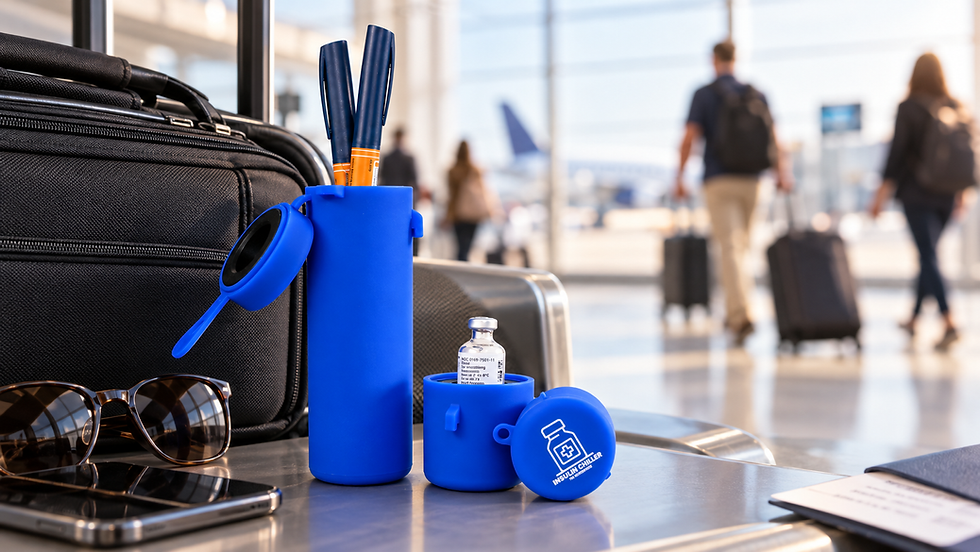
The Insulin Chiller offers compact portable cooling options designed around insulin and other appropriately sized temperature-sensitive medications.
The Pen Chiller is designed for pen-style medications, while the Bottle Chiller provides space for small medication bottles or vials. Which option makes sense depends on what you carry and the storage instructions for your specific insulin.
Always use The Insulin Chiller according to its instructions and continue to follow the storage requirements provided by your insulin manufacturer.
Explore The Insulin Chiller collection to compare portable medication cooler options for travel.
If your next trip includes a flight as well as a drive, read our Flying With Insulin guide for TSA, carry-on and airport packing tips.
Frequently Asked Questions
Can insulin stay in the car during a road trip?
Do not leave insulin in a parked car. Vehicle temperatures can rise or fall quickly, and insulin should be protected from extreme heat and freezing. Keep it with you and follow the storage instructions for your specific insulin.
Should insulin be placed directly on an ice pack?
Not automatically. The CDC advises against placing insulin directly on ice or a frozen gel pack. Follow the insulin label and the instructions for your cooling method so the medication is protected without freezing.
How much insulin should I bring on a road trip?
Bring enough for the planned trip and consider extra medication and supplies for unexpected delays. The exact amount depends on your treatment plan, so ask your healthcare provider or pharmacist if you need help planning the supply.
Final Thoughts
The biggest road-trip mistake is treating insulin like ordinary luggage.
Keep it accessible, protect it from heat and freezing, plan for the entire travel day and know what you will do if the drive takes longer than expected.

With a little preparation, you can focus more on the trip and less on where your medication is stored.
For more practical information about insulin storage, flights and medication cooling, browse our Medication Travel Guides.
Medical Disclaimer: This article is for general informational purposes only and is not medical advice. Always follow the storage instructions provided with your medication and consult your doctor, pharmacist, or healthcare provider with questions about your specific treatment or travel needs.