Traveling With Repatha: Storage, Flights and Cooler Tips
Traveling with Repatha can be straightforward when you know the medication’s storage limits before you leave.
Whether you are flying, driving or staying in a hotel, the most important rule is to follow the current manufacturer instructions for your specific Repatha device.
Does Repatha Need to Be Refrigerated?
According to Amgen, Repatha should normally be stored in a refrigerator between 36°F and 46°F in its original carton.
Amgen also states that Repatha may be kept at room

temperature between 68°F and 77°F in its original carton for up to 30 days. If it is kept at room temperature, it must be used within that 30 day period.
Because medication instructions can change, check the current Repatha prescribing information before your trip.
How to Travel With Repatha
Keep Repatha in Its Original Carton
The carton helps protect Repatha from light and keeps the prescription clearly identifiable.
This is especially useful during flights and longer trips.
Plan Around the Room Temperature Allowance
For some trips, the manufacturer’s room temperature allowance may mean continuous refrigeration is not necessary.
That does not mean Repatha can be exposed to a hot car, direct sunlight or temperatures above its labeled limits.
If your trip or conditions require refrigerated storage, plan your cooling method before departure.
Flying With Repatha
Keep essential medication accessible rather than placing it where you cannot reach it during travel.
Amgen advises travelers to check their transportation provider’s policy for needles and notes that travelers may bring a copy of their prescription or a doctor’s note for airport security.
Before flying internationally, check medication and sharps rules for your destination as well as your airline’s requirements.
Traveling With Repatha by Car
Cars can heat up rapidly when parked. Do not treat a vehicle as a temperature controlled medication storage space.
Keep Repatha with you when leaving the vehicle and protect it from direct sunlight.
If you use a cooling solution, follow both the cooler instructions and Repatha’s labeled storage requirements.
Staying at a Hotel With Repatha
If you intend to refrigerate Repatha at a hotel, ask whether a refrigerator is available and avoid placing medication against a freezer compartment or very cold cooling surface.
If you plan to use the room
temperature allowance instead, keep track of how long the medication has been outside refrigeration and make sure the room remains within the manufacturer’s permitted temperature range.
Can You Use a Medication Cooler for Repatha?
A portable medication cooler may be useful when your travel plan calls for refrigerated storage, but the goal is controlled storage rather than simply making the medication as cold as possible.
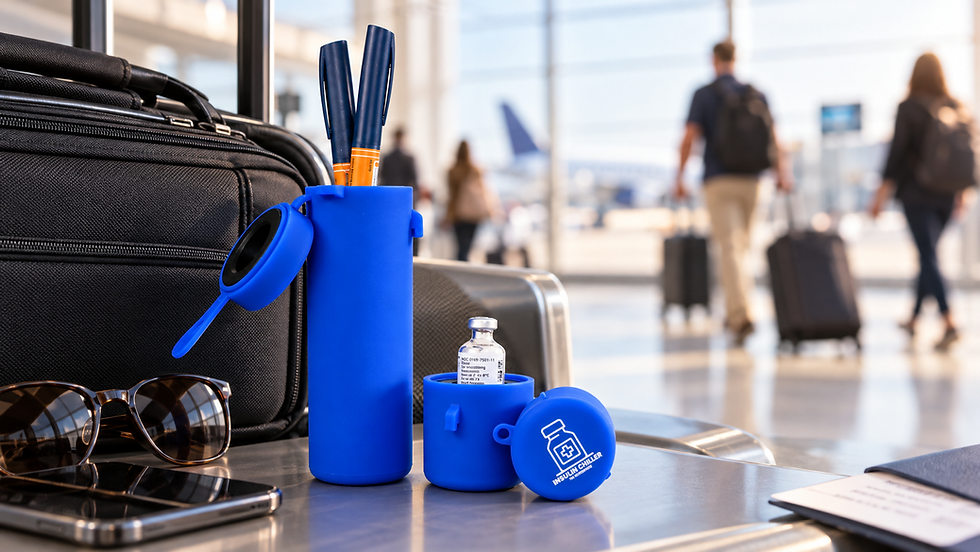
The Insulin Chiller offers compact portable cooling options designed for appropriately sized temperature sensitive medications.
Before using any cooler with Repatha, confirm that the medication fits appropriately and that the storage method is consistent with Amgen’s current instructions. Do not allow the medication to freeze.
Repatha Travel Checklist
Before leaving, confirm the following:
• Review the medication’s current storage instructions.
• Keep Repatha in its original carton.
• Plan for heat and long travel days.
• Carry prescription information when useful.
• Check rules for needles and sharps.
• Know what you will do if refrigeration is unavailable.
Frequently Asked Questions
How long can Repatha be out of the refrigerator?
Current U.S. manufacturer guidance says Repatha can be stored at room temperature from 68°F to 77°F in the original carton for up to 30 days. Follow the current product instructions for your specific device.
Can I leave Repatha in a hotel room?
Only if the storage conditions remain within the manufacturer’s permitted range. Avoid direct sunlight, excessive heat and freezing conditions.
Should I travel with a cooler?
That depends on the length and conditions of your trip and how you plan to use the manufacturer’s room temperature allowance.
If refrigerated storage is needed, use a method that protects the medication from both overheating and freezing.
Medical Disclaimer: This article is for general informational purposes only and is not medical advice. Always follow the storage instructions provided with your medication and consult your doctor, pharmacist, or healthcare provider with questions about your specific treatment or travel needs.