Medicine Cooler for Travel: How to Choose the Right Size and Setup
A medicine cooler for travel does not need to be bulky to be useful.
The right setup depends on what medication you carry, how long you will be away from reliable temperature control and what the manufacturer says about storage.
This matters because “refrigerated medication” is not one universal category. Different prescriptions have different allowable temperature ranges and different limits for time outside refrigeration.
The best travel cooler is therefore one that fits your medication and your actual trip rather than simply being the coldest option available.

Start With the Medication Label
Before choosing any travel cooler, read the storage section of the prescribing information for your exact medication and formulation.
Some medicines normally require refrigeration. Others have an approved room temperature allowance for a limited period. Some medications must never freeze even when refrigeration is normally recommended.
The lesson is simple: know your medication’s rules first, then choose the cooler.
What Makes a Good Medicine Cooler for Travel?
A Size That Matches Your Medication
If you carry medication pens, a compact pen-sized solution may make more sense than a large lunchbox style cooler.
If you use vials or small bottles, a smaller protected compartment may be enough.
A compact design can also make it easier to keep medication in your carry-on, backpack or purse where it remains accessible.
Protection From Heat Without Accidental Freezing
Temperature sensitive medication can be damaged by excessive heat, but some medications can also be damaged by freezing.
FDA specifically warns not to use insulin that has been frozen.
Avoid assuming that direct contact with ice is always safe. Follow your medication label and use the cooling product according to its instructions.
Enough Cooling Time for the Trip
Think in terms of the entire travel window, not just flight time.
A two hour flight can easily become a much longer travel day once the drive, airport wait, boarding, connections and ground transportation are included.
For longer travel, plan where you can safely refresh your cooling system or refrigerate medication if its labeling requires it.
Easy Access
A medication travel cooler should be easy to locate and open when you need it.
For air travel, keeping medication in your carry-on also protects you from checked baggage delays or loss.
Small Travel Cooler Versus Large Cooler Bag
A large insulated bag can be useful when you need to carry several medications or supplies, but it may be unnecessary for a single pen or vial.
A small travel cooler is usually easier to pack and carry.
The tradeoff is capacity. Before choosing a cooler, count how many pens, vials or bottles you normally carry and compare their dimensions with the usable interior space of the product you are considering.
Traveling With Medication Pens
Medication pens are long and narrow, so a purpose sized container can save space.
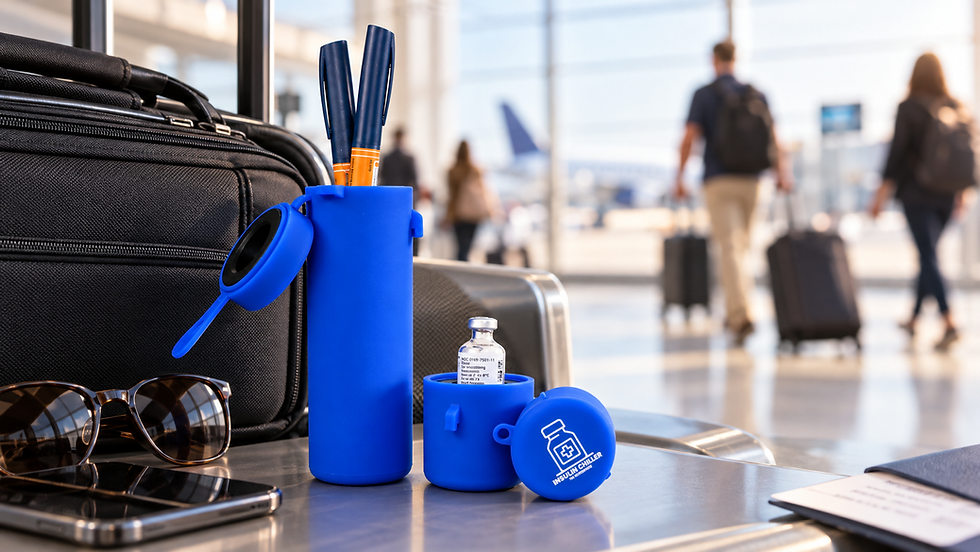
The Pen Chiller from The Insulin Chiller is designed for insulin pens and other appropriately sized medications in pen form.
Always confirm that your specific medication fits the product and that the cooling setup matches the medication manufacturer’s storage instructions.
Traveling With Insulin Vials or Small Bottles
Vials and small bottles have a different concern: protection from impact as well as temperature.
A compact bottle-sized container can reduce bulk while giving the medication a defined protected space during travel.
The Insulin Chiller offers a Bottle Chiller format for appropriately sized medication bottles and vials.
What About Air Travel?
TSA allows medications in carry-on bags. Medically necessary liquids can exceed the normal 3.4 ounce limit, and medically necessary cooling accessories such as ice packs and frozen gel packs are permitted subject to screening.
If you use cooling accessories, keep them accessible at security and be prepared for additional screening when requested.
Planning for Hotels, Road Trips and Long Days
Your cooler is only one part of the plan.
Before leaving, consider where you will be able to refrigerate medication or refresh the cooling system if needed.
For a hotel stay, confirm refrigerator or freezer access based on what your medication and cooling system require.
On a road trip, avoid leaving medication inside a parked vehicle, where temperatures can rise quickly.
For outdoor activities, keep the cooler shaded and protected from direct heat.
Which Insulin Chiller Format Is Right for You?
Choose based on medication format first.
The Pen Chiller is designed for medication pens. The Bottle Chiller is designed for appropriately sized medication bottles and vials.
The right choice depends on what you carry, the medication’s dimensions and the storage requirements provided by its manufacturer.
A portable cooler should make travel simpler, not replace the storage instructions for your prescription.
Confirm those instructions before every trip, particularly if your medication or formulation has changed.
Frequently Asked Questions
What should I look for in a medicine cooler for travel?
Start with medication fit, storage requirements, trip length and portability. The best solution is one that supports the conditions required by your medication without creating unnecessary freezing risk.
Should a medication cooler be as cold as possible?
No. Some temperature sensitive medications must not freeze. Follow the label for the exact medication and the instructions for the cooler you use.
Can I bring a medicine cooler on a plane?
Medication coolers can be carried through U.S. airport security, and medically necessary cooling accessories are allowed subject to TSA screening. Review current TSA guidance before departure.
Medical Disclaimer: This article is for general informational purposes only and is not medical advice. Always follow the storage instructions provided with your medication and consult your doctor, pharmacist, or healthcare provider with questions about your specific treatment or travel needs.