Traveling With Dupixent: Storage, Flights and Cooler Tips
Traveling with Dupixent requires more planning than packing an ordinary prescription because the medication has specific temperature and light protection requirements.
The manufacturer provides travel and storage guidance that can help you decide whether your trip requires refrigeration or can use the medication’s

permitted room temperature window.
Does Dupixent Need to Be Refrigerated?
According to the official U.S. Dupixent guidance, Dupixent should normally be refrigerated between 36°F and 46°F in its original carton to protect it from light.
If necessary, Dupixent prefilled pens and syringes may be kept at room temperature up to 77°F for a maximum of 14 days.
After removal from the refrigerator, the medication must be used within 14 days or discarded. The manufacturer also says not to store Dupixent above 77°F, expose it to heat or direct sunlight, freeze it or shake it.
How to Travel With Dupixent
Keep Dupixent in Its Original Carton
The original carton protects the medication from light and keeps important prescription information together.
The manufacturer recommends keeping Dupixent in the carton while traveling.
Decide Whether You Need Refrigeration During the Trip
A short trip may fit within Dupixent’s labeled room temperature allowance if all conditions remain within the manufacturer’s limits.
Longer trips or hotter conditions may require a refrigeration plan.
Do not assume that “room temperature” includes a hot vehicle, sunny beach bag or luggage sitting outdoors. The labeled maximum is 77°F.
Flying With Dupixent
Dupixent’s manufacturer directs travelers to TSA guidance and notes that medications, freezer packs, syringes and other medically necessary accessories go through security screening.
Keep medication accessible and protected during the flight.
Before an international trip, also check the medication rules for the destination and any countries where you will transit.
Can Dupixent Travel in a Medication Cooler?
A portable medication cooler may be useful when your travel plan requires refrigerated storage.
The critical point is to follow the medication label rather than assuming colder is always better.
Dupixent must not freeze. If you use a cooler or cold pack system, make sure the medication is protected from freezing temperatures and remains within the manufacturer’s requirements.
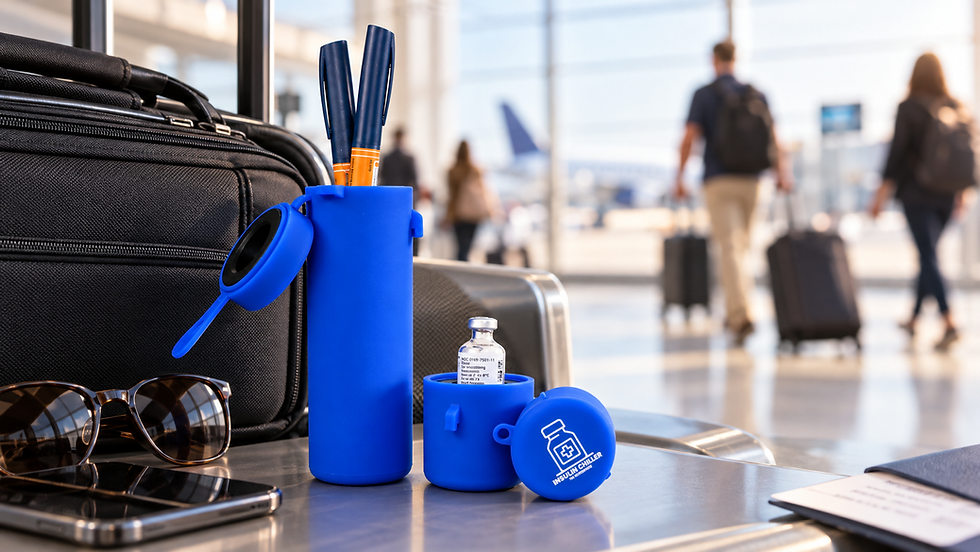
The Insulin Chiller offers compact portable cooling options for appropriately sized temperature sensitive medications.
Before using any cooler for Dupixent, confirm that your specific device fits appropriately and that the cooling method matches the manufacturer’s current storage instructions.
Dupixent at Hotels and Vacation Rentals
If you plan to refrigerate Dupixent, confirm that suitable refrigeration is available before arriving.
Avoid placing the carton directly against a freezer compartment or cooling plate where it could freeze.
If you are using the permitted room temperature window instead, keep track of when the medication left refrigeration and protect it from temperatures above 77°F.
Dupixent Road Trip Tips
Keep Dupixent with you rather than leaving it in a parked car.
Direct sun and vehicle heat can quickly create conditions outside the labeled storage range.
Plan stops, overnight stays and long days away from refrigeration before you depart so the medication storage plan remains consistent throughout the trip.
Frequently Asked Questions
How long can Dupixent stay out of the refrigerator?
Current U.S. manufacturer guidance permits Dupixent to be kept at room temperature up to 77°F for a maximum of 14 days. Once removed from refrigeration, it must be used within 14 days or discarded.
Can Dupixent freeze in a cooler?
It should not. The manufacturer says not to freeze Dupixent. Any travel cooling system should prevent direct exposure to freezing conditions.
Can I fly with Dupixent pens or syringes?
Yes, but medication and accessories must be screened. Review current TSA guidance and your airline’s requirements before departure, particularly for international travel.
Medical Disclaimer: This article is for general informational purposes only and is not medical advice. Always follow the storage instructions provided with your medication and consult your doctor, pharmacist, or healthcare provider with questions about your specific treatment or travel needs.